


Επιστροφή


Επιστροφή
De Quervain’s syndrome that is also known as De Quervain tenosynovitis or stenosing tenosynovitis of De Quervain is a painful condition that affects some of the tendons at the base of the thumb, on the thumb side of the wrist. It occurs when the tendons, specifically the abductor pollicis longus and extensor pollicis brevis, become irritated, constricted, and swell within their sheath, hindering smooth movement. The condition is often caused by repetitive hand and thumb motions, such as twisting, gripping or making a fist and can lead to pain, tenderness, swelling, and a “sticking” sensation when moving the thumb and wrist.
De Quervain’s syndrome develops when the sheath surrounding two tendons at the base of the thumb becomes inflamed or thickened, causing painful compression. In most cases, the exact cause is often unclear but may be related to hormonal changes (such as during pregnancy), while other times it may be associated with repetitive movements of the thumb (overuse syndrome). Any activity that requires repetitive movements of the wrist and fingers, such as housework, gardening, or holding a baby, can cause De Quervain’s syndrome.
Tendons are tough cords of tissue that connect muscles to bones. Whenever we need to hold something tightly with our fingers or move the thumb against resistance, two tendons located at the base of the thumb must move smoothly to allow the movement.
The tendons that move your thumb pass through a narrow passageway, or tunnel, in your wrist. This tunnel is covered by a protective sheath, which normally allows the tendons to glide freely. Overuse, repetitive motions, or certain injuries can irritate and inflame the tendon sheath. This inflammation leads to swelling and thickening of the sheath. The thickened sheath then constricts the tendons, causing them to rub against the tunnel, which leads to pain and difficulty moving.
Other causes of De Quervain’s syndrome include:
Risk factors for de Quervain tenosynovitis include:
Other Potential Risk Factors
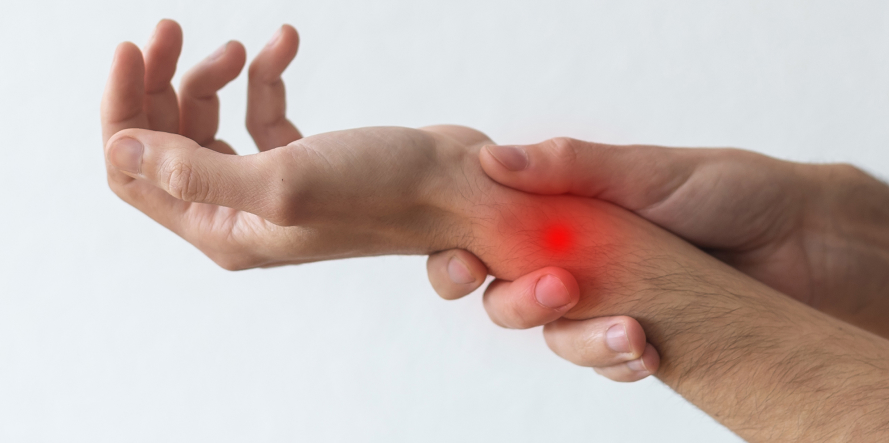
The main symptoms of De Quervain’s Tenosynovitis are the following:
Diagnosis of De Quervain syndrome is highly suggested by the Finkelstein test. The patient adducts the involved thumb into the palm and wraps the fingers over the thumb. The test is positive if gentle passive ulnar deviation of the wrist provokes severe pain at the affected tendon sheaths. A positive hitchhiker’s maneuver (pain elicited along first extensor compartment during resisted thumb extension) is also highly suggestive.
Your orthopedic surgeon might also use imaging tests like X-rays to check your wrist joint for signs of other conditions that cause wrist pain (like osteoarthritis).
De Quervain’s syndrome can be a particularly painful clinical condition. In some mild cases, symptoms may improve with conservative treatment.
The conservative treatment options are the following:
Surgical Treatment
Tendon Sheath Decompression: If conservative treatments are unsuccessful, surgery can be performed. During this procedure, the surgeon makes a small incision (about 2cm long) and carefully releases the constricted tendon sheath, providing more room for the tendons to move and it can be performed under local, regional, or general anesthesia.
The symptoms relief is rapid and the patient can return to his/her normal, daily activities after the stitches removal, about 12 days postoperatively.
Potential Complications
Can De Quervain’s syndrome be treated without surgery?
Yes, De Quervain’s syndrome can often be treated effectively without surgery through conservative methods like corticosteroid injections, splinting, and physiotherapy. While surgery may be recommended if these treatments fail to relieve symptoms, most cases can be resolved with non-surgical approaches, especially when the condition is diagnosed and treated early.
What are the success rates of the surgical procedure?
The surgical success rate for De Quervain’s syndrome is over 95% when performed by specialized hand surgeons.

Fill in your details below and we will contact you immediately!
WIN THE
MATCH POINT IN THE RACE
OF YOUR HEALTH!