


Επιστροφή


Επιστροφή
A rotator cuff tear occurs when one or more of the tendons in the shoulder are damaged or torn. This injury is a common cause of shoulder pain and often leads to difficulty or limitation in moving the arm.
The rotator cuff is a group of muscles and tendons that surround the shoulder joint. It plays a crucial role in shoulder stability and movement, keeping the upper arm bone (humerus) securely within the shoulder socket. These muscles and tendons allow for a wide range of arm motions and help to prevent the shoulder from dislocating. The rotator cuff consists of four tendons that cover the head of the humerus bone in the shoulder, forming a structure that resembles a cuff. These tendons are the following:
In addition to these four, the long head of the biceps brachii tendon is often considered part of the rotator cuff complex because of its close proximity and functional relationship with these tendons.
A rotator cuff tear means that one or more of these tendons has been damaged, either partially or completely torn. This tear can result from:
Among these tendons, the supraspinatus tendon is one of the most frequently damaged or torn.
The rotator cuff is a group of four tendons and their associated muscles that surround the shoulder joint. These tendons attach the muscles to the head of the humerus (the upper arm bone) and play a crucial role in stabilizing and moving the shoulder.
The primary functions of these tendons are the following:
These functions are vital for everyday tasks such as reaching, lifting, throwing, and other arm movements.
A rotator cuff injury can happen from:
Often, the rotator caff tear is the result of the subacromial impingement syndrome.
A rotator cuff tear may have significant consequences for the shoulder joint, such as:
Depending on the cause of the tear, the appropriate treatment is selected—either conservative for degenerative tears or partial ruptures or surgical treatment for the acute traumatic tears or when conservative treatment fails.
The rotator cuff plays a crucial role in stabilizing the shoulder and enabling arm movement. Its primary function is to center the humeral head (the “ball” of the ball-and-socket joint) within the glenoid (the “socket”), preventing it from drifting upwards or sideways. Additionally, the rotator cuff muscles assist in shoulder abduction (raising the arm away from the body), internal rotation, and external rotation. A rotator cuff tear can disrupt these functions, leading to pain, weakness, and limited range of motion, as the humeral head may displace upwards and impingement issues occur.
A rotator cuff tear occurs relatively frequently, at a rate of over 25% after the age of 50 and over 50% after the age of 70.
Get a second opinion from the specialized Orthopedic Surgeon, Dr. Panagiotis Pantos.
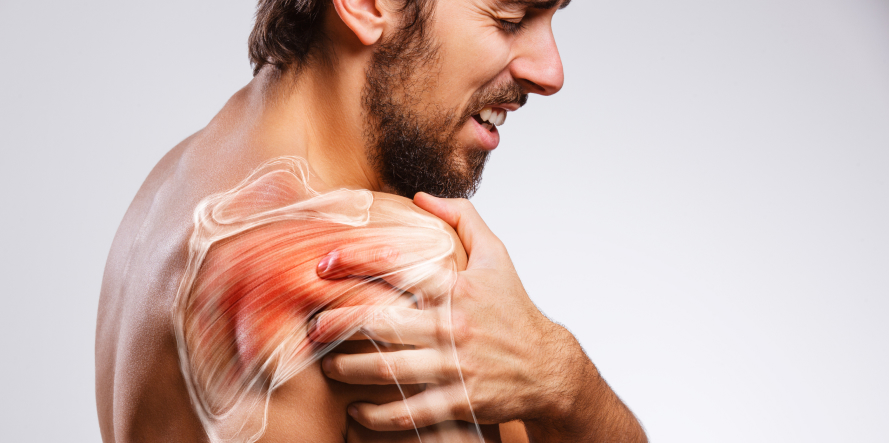
The shoulder joint is stabilized and moved by several tendons, most notably the rotator cuff tendons. A tear in these tendons can cause pain, weakness, and limited shoulder movement. These tears generally fall into the following categories:
Traumatic Tears
These tears happen suddenly due to an acute injury. Common causes include:
Traumatic tears often happen alongside other shoulder injuries, like a shoulder dislocation (where the upper arm bone pops out of the shoulder socket) and they may affect younger and active individuals, especially those involved in sports or physical labor.
Degenerative Tears
These develop gradually over time, often from wear and tear rather than a single injury. A common underlying problem is subacromial impingement syndrome, where the tendons get pinched between bones during shoulder movement. They usually affect the arm used most often, as repeated use causes more wear.
Risk factors:
They are more common in middle-aged and older adults, especially those with physically demanding jobs or sports.
Factors that predispose individuals to these types of tears include:
The rotator cuff tendons receive less blood flow as people age. The poor blood supply reduces the tendons’ ability to heal from injury. This makes older adults more prone to degenerative tears.
Certain sports like baseball, tennis, swimming, and manual labor jobs involve repetitive shoulder movements. This repeated stress causes tiny injuries that accumulate over time, weakening the tendon.
They are a mixture of both degenerative changes and a traumatic event.
In this case, a patient may have an asymptomatic (without symptoms) degenerative tear that becomes problematic after a fall or injury. The trauma can cause the tear to enlarge or worsen, leading to increased pain and functional loss. Its main symptoms are gradual worsening of shoulder pain, weakness, and reduced range of motion.
Summary
The rotator cuff is a group of muscles and tendons surrounding the shoulder joint, helping stabilize it and enable a wide range of movements. Tears in these tendons can vary significantly in size and severity, which guides how they are classified and treated:
Small, partial thickness tears of the rotator cuff may be asymptomatic or they might be mild and temporary, such as occasional shoulder pain or slight weakness. Larger rotator cuff tears tend to cause persistent, often severe pain in the shoulder and are often accompanied by restricted mobility of the Upper Limb.
Pain may begin on the front (anterior) surface of the shoulder but can radiate to the scapular region (shoulder blade) or down the arm muscles. Pain often worsens at night, sometimes interfering with sleep, and may even be present at rest.
During clinical examination, pain is typically provoked by lifting the arm or rotating it, especially against resistance. Reduced strength in the affected arm is common because the torn tendons can’t perform their stabilizing and moving functions properly. The patient may experience stiffness and a reduced range of motion.
A physical exam is the first step to diagnosing rotator cuff injuries. During the exam, the doctor will press on different parts of the affected shoulder and move the arm into different positions. He will also test the strength of the muscles around the shoulder and in the arms.
To confirm the diagnosis and evaluate the extent of the tear, imaging tests are essential:
The choice of the appropriate treatment is vital because the rotator cuff is essential for shoulder function. Without proper management, a tear can lead to chronic pain, decreased mobility, and loss of function. Treatment affects not only symptom relief but also the long-term quality of life—allowing the patient to return to daily activities, work, or sports.
Choosing an experienced orthopedic surgeon is also crucial. These specialists assess the severity of the tear, the patient’s activity level, overall health, and personal goals.
A skilled surgeon can customize the treatment plan, deciding between conservative (non-surgical) methods or surgery based on the individual case.
Proper diagnosis usually involves a physical exam and imaging tests like MRI or ultrasound to determine tear size and tendon quality.
Treatment options include both concervative (non-surgical) and surgical procedures.
Conservative treatment refers to managing a condition without surgery, aiming to relieve symptoms and improve function through non-invasive methods. It is often the first approach for many patients, especially when the injury or condition is mild to moderate, or when surgery carries higher risks or is not immediately necessary.
Approximately 50% of patients undergoing conservative treatment experience reduced pain and better shoulder mobility. While symptoms may improve, muscle strength usually does not fully recover without surgical repair, especially if there is a significant tear or tendon damage. If surgery is delayed or avoided too long, the injury can worsen:
These changes make later surgical repair, such as arthroscopic suturing (minimally invasive stitching of the tendon), more difficult or sometimes impossible. Rehabilitation post-surgery becomes more challenging and less effective if the tissue quality is poor.
Conservative Treatment includes the following:
The Orthopedic Shoulder Surgeon has the ability, with the help of arthroscopic techniques, to repair the tear and restore the functionality of the shoulder and the entire Upper Limb.
The major advantages of arthroscopic techniques are the following:
For full-thickness rotator cuff tears (where the tendon is completely torn through), prompt surgical repair is critical. Delaying surgery can lead to worsening of the injury, loss of shoulder function, and muscle wasting. Improper or delayed treatment often results in irreversible damage, making it much harder or even impossible to fully restore normal shoulder function later. Early repair tends to lead to better outcomes in terms of pain relief, strength, and mobility.
Summary
Arthroscopic Tendon Repair
Tendons connect muscles to bones and are crucial for joint movement and stability. In the shoulder, the rotator cuff tendons are commonly injured, leading to pain, weakness, and limited range of motion. If untreated, tendon tears can worsen and cause joint damage. When non-surgical treatments such as physical therapy, medications, or injections fail to relieve pain or restore movement, surgery may be recommended. The modern approach for treating tendon tears is shoulder arthroscopy.
It is a minimally invasive surgical procedure used to treat tendon tears, especially in the shoulder. Instead of a large open surgery, arthroscopy uses small incisions. A tiny camera called an arthroscope is inserted into the joint. It projects images onto a monitor, allowing the surgeon to see inside the shoulder. Through other small incisions, surgeon inserts tools to trim, repair, or reposition the torn tendon.
This minimally invasive surgical procedure utilizes specialized implants, bioabsorbable materials, and the option to inject stem cells to repair and reposition damaged joint tissues. The procedure is typically performed on an outpatient basis, allowing patients to return home the same day.
The most common advantages of Arthroscopic Repair are the following:
Post-Operative Care and Recovery
Reverse Shoulder Arthroplasty (RSA)
Reverse Shoulder Arthroplasty (RSA) is a type of shoulder replacement surgery where the anatomy of the shoulder joint is reversed. Normally, the shoulder joint has a ball (humeral head) on the upper arm bone and a socket (glenoid) on the shoulder blade. In RSA, the ball and socket are switched—the ball is placed on the shoulder blade side, and the socket is on the upper arm side. RSA is typically recommended for patients with:
Because RSA relies on the deltoid muscle rather than the rotator cuff, it can restore shoulder function and reduce pain in cases where traditional shoulder replacement or repair wouldn’t succeed.
Dr. Panagiotis Pantos, a specialized Orthopedic Surgeon for the Upper Limb and Sports Medicine, has more than 15 years of experience exclusively as an Upper Limb Surgeon. He is the Head of the Upper Limb Department at the Athens Medical Group (AMG), indicating a leadership role with responsibilities including surgical care, mentoring, and advancing treatment techniques.
He has performed hundreds of shoulder arthroscopies, indicating a high level of surgical expertise and volume, which often correlates with better patient outcomes.
His approach includes a detailed assessment of each case, thorough patient education, and tailored treatment plans that are customized according to the severity, duration and patient needs.
The treatment plan that applies to his patients not only alleviates pain and restores mobility but also prevents recurrences ensuring a patient’s long-term quality of life. So, patients may return to normal activities without chronic discomfort.
Which individuals are most likely to suffer from a rotator cuff tear?
The shoulder tendons, especially the rotator cuff tendons, weaken with age due to natural wear and tear, making older adults the most common group affected. This degeneration can make the tendons more prone to tearing even with minor trauma or normal daily activities. Although less common, younger people can also suffer from tendon ruptures. Sports that involve repetitive overhead arm movements — like basketball, swimming, tennis, and volleyball — place repeated stress on shoulder tendons, increasing the risk. People who perform repetitive arm movements above shoulder height for work, such as carpenters, painters, and hairdressers, can develop rotator cuff damage over time, leading to tear risk.
Is there anything I can do to prevent a rotator cuff tear?
Regularly performing shoulder strengthening and flexibility exercises helps maintain the health and resilience of the tendons. These exercises often focus on the rotator cuff muscles and scapular stabilizers. Before starting exercises, it’s important to get a professional assessment to create a program tailored to your shoulder condition and avoid exacerbating any underlying issues.
Can shoulder surgery be performed only arthroscopically or also openly?
Rotator cuff tears are usually treated arthroscopically. Sometimes open surgery is necessary if there are additional injuries that can’t be addressed arthroscopically, such as: deltoid muscle injury, fracture of the acromion (part of the shoulder blade), large or complex tears that need more extensive repair, etc. The choice of surgery depends on the severity, type of tear, patient’s health, and surgeon’s expertise.

Fill in your details below and we will contact you immediately!
WIN THE
MATCH POINT IN THE RACE
OF YOUR HEALTH!