Ulnar Neuritis

Ulnar Neuritis: What It Is

The ulnar nerve is one of three major nerves in the elbow area, along with the median and radial nerves. It travels along the inner (medial) side of the elbow, passing through a specific anatomical area called the ulnar tunnel or cubital tunnel. This tunnel is a relatively tight space, making the ulnar nerve susceptible to compression or injury, a condition known as cubital tunnel syndrome.

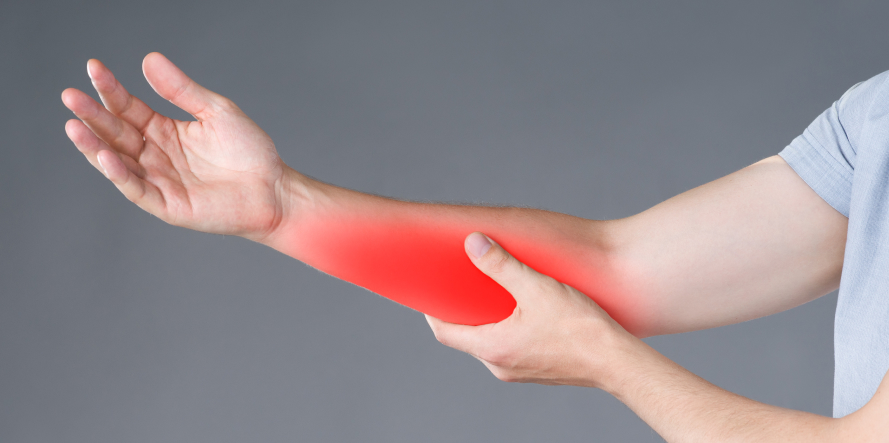
Ulnar neuritis occurs when the ulnar nerve, which passes through a narrow tunnel formed by bone and ligaments on the inside of the elbow (the cubital tunnel), is compressed. This compression can lead to pain, numbness, tingling, and weakness in the hand and fingers supplied by the ulnar nerve, and in severe cases, muscle atrophy.

Ulnar neuritis, also known as ulnar neuropathy or cubital tunnel syndrome, is the second most common nerve entrapment condition in the upper limb, after carpal tunnel syndrome.

Ulnar Neuritis: Symptoms

The main symptoms of ulnar neuritis are the following:

  1. Pain on the inner side of the elbow (medial epicondyle)
  • Often described as a dull ache, burning, or even sharp pain.
  • It may worsen with prolonged bending of the elbow (e.g., while talking on the phone or sleeping).
  1. Numbness and Tingling (Paresthesia)
  • Commonly affects the 4th (ring) and 5th (little) fingers, and part of the palm.
  • May extend up the forearm.
  • Symptoms may come and go initially, especially with activity, but can become persistent over time.
  1. Weakness in the wrist and hand
  • Particularly in grip strengthand fine motor tasks (e.g., typing, buttoning clothes).
  • May involve weakness in wrist flexion and finger abduction/adduction.
  1. Sensation of snapping or popping at the elbow
  • Often occurs when bending and straightening the elbow.
  • Can be due to the ulnar nerve subluxing(shifting out of its normal groove).
  1. Muscle Atrophy
  • In long-standing or severe cases, muscles controlled by the ulnar nerve (e.g., interossei, lumbricals, hypothenar eminence) may waste away.
  • This results in visible thinning of hand muscles and deformities like claw hand.

Ulnar Neuritis: Causes

The main causes of ulnar neuritis, which may occur either individually or in combination, are the following:
  1. Reduced Space in the Ulnar Tunnel (Cubital Tunnel Stenosis)
  • Congenital narrowing or anatomical variations may compress the nerve.
  1. Swelling of the Ulnar Nerve
  • Can occur due to inflammation, repetitive trauma, or systemic diseases (like diabetes or rheumatoid arthritis).
  1. Repetitive Elbow Flexion
  • Activities like cycling, typing, weight lifting, or habitual elbow leaning can irritate the nerve.
  1. Previous Trauma or Injury
  • Fractures, dislocations, or direct blows to the medial elbowcan damage or displace the ulnar nerve.
  1. Elbow Instability
  • Loose ligaments or anatomical anomalies may cause the nerve to dislocate or be exposed to friction.
  1. Fractures on the Inner Side of the Elbow
  • Particularly of the medial epicondyleor olecranon may directly damage or narrow the nerve’s path.
  1. Advanced Elbow Arthritis
  • Degenerative joint changes can deform bone and impinge on the ulnar nerve.

Ulnar Neuritis: Risk Factors

Several risk factors can increase the likelihood of developing ulnar neuritis:

  1. Elbow Arthritis:
  • Inflammatory conditions like osteoarthritis or rheumatoid arthritis can cause joint swelling, leading to compression of the ulnar nerve.
  1. Repetitive Elbow Motion or Prolonged Flexion:
  • Jobs or sports involving repeated elbow bending (e.g., carpentry, mechanics, baseball pitchers, tennis players) can irritate or compress the nerve.
  • Sleeping with bent elbows for prolonged periods is a common cause in sedentary individuals.
  1. Trauma or Previous Elbow Injury:
  • A direct blow or fracture to the elbow may cause swelling, scarring, or deformity that compresses the nerve.
  1. Systemic Inflammatory or Autoimmune Diseases:
  • Conditions like lupus, rheumatoid arthritis, or diabetes mellituscan predispose nerves to inflammation or damage, including the ulnar nerve.
  1. Anatomical Variations:
  • Some people have a naturally narrow cubital tunnel, increasing their risk of nerve entrapment.

Ulnar Neuritis: Treatment

Conservative treatment

The initial management for ulnar neuritis should focus on conservative measures, including rest, activity modification, nonsteroidal anti-inflammatory drugs (NSAIDs), physical therapy and nighttime elbow padding or splinting, as these approaches have been shown to reduce symptoms and improve function in patients with ulnar neuropathy at the elbow.

The majority of patients improve significantly with conservative treatment, with symptoms often subsiding withing a few days or weeks.

Surgical Treatment

However, in cases of persistent or worsening ulnar nerve irritation (ulnar neuritis), surgical treatment may be necessary. This involves opening the constricted ulnar canal and relieving pressure on the ulnar nerve. Sometimes, the nerve is relocated to prevent recurrence of the compression.

The surgery is typically performed by a specialized Upper Limb surgeon. The procedure lasts around 30 minutes and patients are often discharged the same day. The return to light daily activities is usually possible within two weeks, following the procedure, with a full recovery anticipated.

Dr. Panagiotis Pantos

Contact

Related Articles

Contact Form

Fill in your details below and we will contact you immediately!

    WIN THE
    MATCH POINT IN THE RACE
    OF YOUR HEALTH!