


Επιστροφή


Επιστροφή
The fingers and palm are held together by the palmar fascia, a tough, triangular sheet of connective tissue that anchors tendons and prevents excessive backward bending of the fingers, providing a strong grip.
Dupuytren’s disease is a condition where the palmar fascia (tissue under the skin of the palm) thickens and shortens, forming knots and cords that can pull fingers into a bent position, known as Dupuytren’s contracture. This progressive deformity interferes with daily tasks and can significantly affect hand function over time.
The condition can occur in three forms: acute, subacute, and chronic. It most commonly affects the ring and little fingers and often occurs in both hands.
Dupuytren’s disease often results in reduced hand function and impaired daily activities due to a progressive thickening and tightening of the palmar fascia. This causes fingers to bend inward (contracture), making tasks like grasping, shaking hands, or placing hands in pockets difficult or impossible. The condition typically worsens over time.
The cause of Dupuytren’s disease is not completely known, but most evidence points toward genetics as having the most important role. However, there are many factors that are believed to contribute to the development or worsening of Dupuytren’s disease.
These include:
Sex: Men are much more likely to develop Dupuytren’s disease than are women. In men, symptoms may be worse and progress more quickly.
Heredity (Family History): Dupuytren’s disease often runs in families.
Tobacco and Alcohol use: Smoking tobacco and drinking alcohol both increase the risk of Dupuytren’s disease.
Certain chronic diseases: People with diabetes and epilepsy (or other seizure disorders) are more likely to have Dupuytren’s.
Age: The incidence of the condition increases after the age of 40.
Dupuytren’s disease begins with a painless thickening of the palm’s connective tissue, forming firm lumps (nodules) on the palm of the hand near the metacarpophalangeal (MCP) joint, which over time can develop into cords that pull the fingers into the palm.
In the early stages of the condition, these nodules are painless and do not cause any problems for the patient. However, over time, these nodules can develop into thick, hard cords that pull a finger towards the palm, a process known as a contracture.
While Dupuytren’s disease is often painless, especially in the early stages, the cords can become tender or painful as they thicken and cause more significant hand impairment.
As the tissue beneath the skin tightens, the finger begins to bend toward the palm or curve downward, making it difficult or even impossible for the patient to keep their fingers straight.
As a result, the patient experiences significant difficulty performing everyday movements and activities, as the affected finger shows a marked inability to extend.
As the condition continues to progress, the contracture extends, causing stiffness in the finger joints and skin shrinkage. The patient may even be unable to place his/her hand flat on the table.
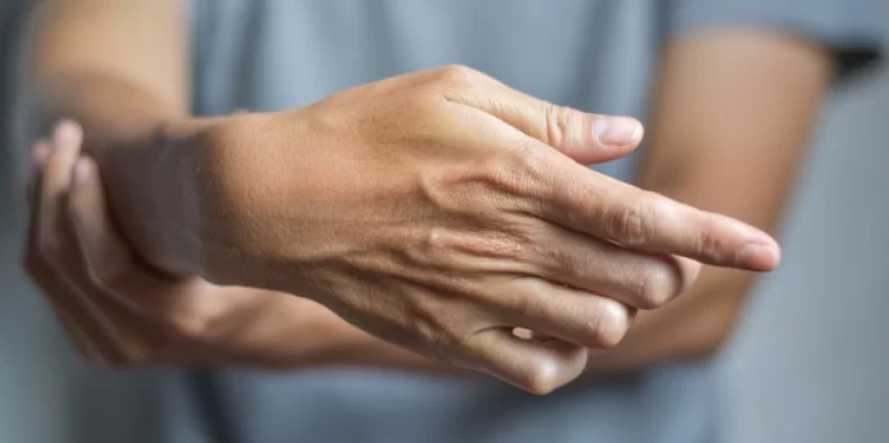
A doctor performs a thorough hand examination by inspecting for tissue hardening, deformities, nodules, and tissue cords in the palm, and assessing the finger’s range of motion to determine the severity of the condition.
Another test for Dupuytren’s disease involves putting the palm of the hand flat on a tabletop or other flat surface. Not being able to fully flatten your fingers means you might need treatment.
Dupuytren’s disease is a slow, progressive condition of the hand’s fascia causing finger contractures, but its progression and severity vary greatly among individuals. Some cases remain stable with just painless lumps in the palm, while others progress to develop thick cords that bend fingers into a contracted position, impairing hand function.
If Dupuytren’s disease worsens or becomes painful, the doctor may first recommend non-surgical treatments like steroid injections to manage symptoms and help slow the progression of the disease.
In the initial stage of treatment, steroid injections are recommended. In some cases, this therapeutic approach helps slow down the shortening and thickening of the tissues, reduces swelling and relieves pain. However, the effectiveness of steroid injections varies from patient to patient. While corticosteroids may help with symptoms, they are not likely to keep the disease from getting worse; therefore, they are a treatment, not a cure.
Surgery (fasciectomy) is recommended for Dupuytren’s contracture when it impairs hand function, progresses, or results in severe deformity. The procedure involves an orthopedic hand surgeon removing the thick, tight fascia tissue, including nodules and tissue cords that cause the finger to bend. Because the diseased tissue surrounds nerves and arteries, the orthopedic surgeon must be extremely careful to avoid damaging them during the excision process.
After a fasciectomy for Dupuytren’s disease, you may go home the same day and can expect to wear a night splint to maintain the improved range of motion and prevent recurrence, coupled with physical therapy to further restore hand function. The procedure is typically performed under local anesthesia, and while splints are common, the specific type and duration of wear are determined by the surgeon and vary based on the individual’s recovery and the extent of the disease.

Fill in your details below and we will contact you immediately!
WIN THE
MATCH POINT IN THE RACE
OF YOUR HEALTH!