


Επιστροφή


Επιστροφή
The olecranon is the large, curved bony tip of the ulna bone at the elbow. It forms the back (posterior) part of the elbow joint. The ulna is one of the two long bones in the forearm, the other being the radius. The olecranon serves as an important attachment site for the triceps muscle, which allows you to straighten (extend) your elbow. Because the olecranon is just beneath the skin and lacks significant muscular or soft tissue cushioning, it is vulnerable to injuries from impacts or falls.
An olecranon fracture is a common injury in adults, often resulting from various injury mechanisms such as falls, direct trauma or repetitive strain. These fractures can cause significant pain and limit elbow movement, making timely diagnosis and appropriate treatment crucial for restoring joint function.
Although olecranon fractures usually occur on their own with no other injuries, they can also be part of a more complex elbow injury. Like any fracture, an olecranon fracture can be either stable or displaced. In some cases, the bone breaks in such a way that bone fragments stick out through the skin or a wound penetrates down to the bone. This is called an open fracture. Open fractures are particularly serious because once the skin is broken, infection in both the wound and the bone are more likely to occur. Therefore, immediate treatment is required to prevent infection. Most open fractures often require surgical treatment to restore the stability and function of the elbow joint.
The most common cause of an olecranon fracture is a direct blow to the back (posterior side) of the elbow. This often happens when a person falls directly onto the elbow or hits the elbow against a hard surface.
Common scenarios include:
Impact to the posterior part of the elbow joint can lead to an olecranon fracture. Additionally, an indirect trauma, such as a sudden, forceful contraction of the triceps muscle while the elbow is extended, can also result in an olecranon fracture.
This type of injury is often observed in activities requiring forceful elbow extension such as weightlifting, throwing sports, or gymnastics and cause an avulsion fracture of the olecranon. Finally, pathological conditions, such as osteoporosis (loss of bone density) or bone tumors make the bone fragile and more susceptible to fractures even with minor trauma or strain. In these cases, a simple fall or mild injury may result in an olecranon fracture.
Olecranon fractures are relatively common, accounting for about 10% of all upper extremity fractures.
They occur more frequently in older adults, especially due to falls, as bone density decreases. Younger individuals may also experience olecranon fractures, typically from high-energy trauma, such as car accidents or sports injuries. The prevalence of olecranon fractures is slightly higher in males under 50 due to physical activity and trauma, while in females over 70, it is often associated with osteoporosis and low-energy falls.
The hallmark symptom of an olecranon fracture is sudden, severe pain right at the back of the elbow where the olecranon (the bony tip of the ulna) is located. This pain is usually immediate after trauma, such as a fall directly onto the elbow or a direct blow. Moving the elbow, especially trying to straighten (extend) or bend (flex) the arm, usually makes the pain worse, which limits normal arm function.
After the fracture occurs, inflammation sets in, causing swelling around the elbow joint. The area will be tender to touch, meaning patients feel sharp pain if someone presses on or around the fracture site. This swelling is part of the body’s natural response to injury but also contributes to stiffness and limited movement. Because the fracture can cause bleeding inside the soft tissues around the elbow, bruising (discoloration or dark patches on the skin) often appears within hours or days. This is caused by blood leaking from damaged vessels under the skin.
An olecranon fracture can restrict elbow movement. Specifically, it can limit the ability to extend (straighten) and flex (bend) the arm. This is because the olecranon is a crucial attachment point for the triceps muscle, which is responsible for extending the elbow. In cases where the fracture is displaced (meaning the bone fragments have moved apart), there may be a visible deformity. Sometimes you can see or feel a gap or an abnormal bump where the bone ends no longer line up properly. This deformity is a clear sign of a serious fracture needing urgent medical attention. In severe fractures, the broken bone ends can damage nearby structures like nerves or blood vessels. This may lead to numbness, tingling, weakness in the hand or forearm, or changes in skin color or temperature due to impaired blood flow. These complications increase the urgency for medical evaluation and treatment.
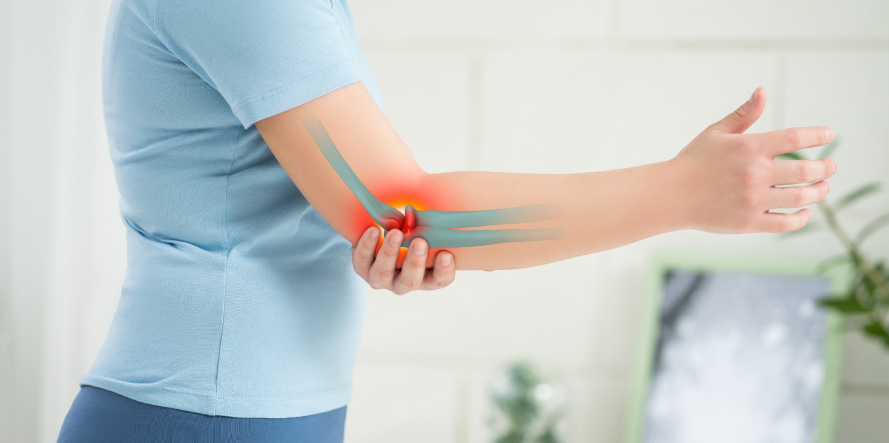
The elbow fracture diagnosis begins with a detailed patient medical history, focusing on how the injury happened. Common causes include a direct blow to the elbow, falling onto an outstretched hand, or a fall directly on the elbow. Patients often report sudden pain at the back of the elbow immediately after the injury. After that, a physical examination reveals typical signs such as: swelling, pain, limited mobility, deformity, tenderness, or potential skin changes.
Furthermore, additional imaging tests are performed, such as simple X-rays that confirm the presence of the fracture, identify the type (simple, comminuted, displaced), and assess the alignment. If the fracture is complex (involving multiple fragments, joint surface involvement, or displacement), a CT scan provides detailed 3D images for surgical planning by showing the precise anatomy and extent of the fracture.
The treatment of elbow (olecranon) fractures depends on factors such as the type of fracture, the displacement, the patient’s age and the activity level. In rare cases, where the bone fragments do not show displacement, conservative management with immobilization of the elbow for a period of 4 weeks can be applied.
However, most olecranon fractures present with displacement or even comminution, requiring surgical repair with open reduction and internal fixation (ORIF). The goal of this procedure is to realign the bone fragments (open reduction) and stabilize them internally (internal fixation) so the elbow can function normally.
Internal fixation, depending on the type of fracture, is performed either with a tension band wiring or with a plate and screws. The application of a tension band is a special technique used for transverse fractures where there is no bone comminution. It involves inserting two pins through the olecranon and wrapping a wire around the olecranon fracture.
When the elbow bends (flexes), the wire compresses the fracture ends together, promoting healing. This method allows early joint movement, which helps prevent stiffness and speeds recovery.
In some cases, a plate may be used to fix the fragments together — this is called open reduction and internal fixation (ORIF). The plate is screwed to the bone fragments to hold them in place. After surgery, special braces are used which support the elbow but allow some controlled movement. These are designed to protect the surgical repair while gradually increasing mobility. Early and targeted rehabilitation is crucial. Physiotherapy focuses on reducing stiffness, restoring full range of motion, and strengthening the muscles around the elbow. The goal is to prevent stiffness and maximize functional recovery of the joint.
An olecranon fracture is a common orthopedic injury that can result from traumatic events, indirect trauma, or underlying pathological conditions. These fractures present with distinct symptoms such as pain, swelling, limited range of motion and sometimes deformity. The accurate diagnosis through clinical evaluation and imaging tests is vital for determining the appropriate treatment approach, which in the majority of cases is surgical.
The effective and timely management of olecranon fractures is crucial for the optimal recovery of the joint. The Upper Limb Orthopedic Surgeon, Dr. Panagiotis Pantos, surgically treats even the most complex cases of elbow fractures, aiming for the optimal restoration of joint functionality.

Fill in your details below and we will contact you immediately!
WIN THE
MATCH POINT IN THE RACE
OF YOUR HEALTH!